
What Homeowners Need to Know Before Installing a Pool Near the Property Line
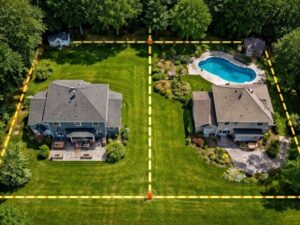
Backyard pools are popular in Pembroke Pines, especially as homeowners look to make the most of their outdoor space. But installing a pool near the property line involves more than choosing a design and hiring a contractor.
Local setbacks, easements, drainage considerations, and neighboring structures can all affect where a pool can legally be placed. Understanding these issues before excavation begins can help avoid permit problems, costly redesigns, and disputes that are much harder to fix later.
Why Pool Designs That Fit the Yard May Not Fit Local Setback Rules
A pool can fit in the backyard and still violate local setback rules. Setbacks are minimum distances required between a structure and the property line. They vary by city, zoning type and structure type.
A pool is not treated the same as a fence or a shed. Many areas require greater setback distances for pools than for other backyard improvements. Some require extra separation from easement lines, not just property lines.
Homeowners often go through an entire design process before learning the placement doesn’t meet setback requirements. At that point, the options are to redesign, apply for a variance, or scale back the project.
Getting a boundary survey done before the design phase is the faster path. It shows exactly where the property line sits, how much usable space exists within the required setbacks, and whether the proposed pool location is even possible.
How Utility Easements Can Restrict Pool Construction in Unexpected Areas
Utility easements don’t show up as painted lines in the backyard. They’re recorded in the property’s legal documents. They restrict what can be built in certain areas regardless of what the ground looks like.
A drainage easement or utility corridor running through the rear of a lot can eliminate what looked like the obvious pool location. Easements can run along the back of the property, cut across a corner, or follow a path that isn’t visible without reviewing the recorded plat.
Building over an easement creates two problems. The permit may be denied outright. If construction proceeds anyway, the utility company or local government may have the legal right to remove the structure without paying the homeowner.
Many homeowners are surprised to find easements on their property because no one pointed them out at closing. A survey that maps easement locations against the proposed pool area gives a clear picture before any money is spent on design.
This step matters more in areas with older infrastructure, where recorded easements may not appear on standard mapping tools or tax records.
Why Existing Fences and Landscaping Can Create False Boundary Assumptions
A fence feels like a boundary. Most homeowners treat it as one. It often isn’t.
Fences get installed without surveys. They get moved over the years. They follow the path of least resistance rather than the legal property line. A fence sitting two feet inside or outside the actual boundary is common. Most homeowners never find out until a survey is done.
Mature trees, hedges and garden walls have the same problem. They grow where they were planted. They were often planted based on a neighbor’s agreement, a contractor’s guess, or a prior owner’s assumption.
When a homeowner uses an existing fence to judge available space for a pool, they may be working from incorrect measurements. A pool positioned close to what the homeowner believes is the property line could end up crossing onto the neighbor’s lot.
That creates a real dispute. Neighbors who stayed quiet about a fence rarely stay quiet when a permanent structure crosses the line.
A boundary survey removes the guesswork. It shows where the legal line sits, not where the fence sits.
How Pool Placement Can Affect Drainage During Heavy Rain
South Florida gets heavy rain fast. When it does, water needs somewhere to go. A pool placed in the wrong spot can block natural drainage flow and push water toward the home or onto the neighbor’s property.
Most lots are graded with a specific drainage pattern in mind. That pattern was set when the subdivision was built. A large structure like a pool, combined with surrounding decking, can redirect water in ways that weren’t planned for.
Permit reviewers look at this. They may require a drainage review or specific grading around the pool deck. If the proposed location sits in a low area or near a swale, the design may need to change.
This is a planning issue that comes up after the boundary and easement questions are settled. Knowing the exact property boundaries first helps identify which areas of the lot have drainage restrictions before a pool location is chosen.
Why Future Projects Should Factor Into Pool Placement Decisions
A pool is permanent. Other projects may not be, but the pool’s location can make them harder.
Homeowners who install a pool close to the property line sometimes find out later that the placement blocks a future addition. It can also limit access for equipment or eliminate space needed for a fence permit. A pool placed along the side yard may use up setback space that was the only viable spot for a detached structure.
Permit offices look at the full lot when reviewing applications. If a future garage, covered patio or accessory structure falls within the same setback zone as the pool, one of those projects may not be approved.
The time to think about future plans is before the pool goes in. A surveyor who asks about long-term property goals can help spot placement conflicts early. That conversation takes a few minutes. Fixing a placement conflict after construction does not.
Choosing a pool location based only on what looks good today can limit what the property can do in five or ten years.
Frequently Asked Questions
Do I need a survey before applying for a pool permit?
Many jurisdictions require a current boundary survey as part of the pool permit application. Even where it isn’t required, a survey is the only reliable way to confirm the proposed placement meets setback requirements before submitting the application.
How close to the property line can a pool be built?
Setback requirements vary by city, county and zoning classification. Most residential pools require a minimum setback of five to ten feet from the property line, but some areas require more. Confirm the applicable rules with the local building department before finalizing pool placement.
What happens if a pool is built too close to the property line?
A pool built in violation of setback requirements may need to be relocated or partially removed. Neighbors can file complaints that trigger code enforcement. The issue can also affect property resale if flagged during a title search.
Can I build a pool over a utility easement?
Generally, no. Permanent structures built over utility or drainage easements can be ordered removed if the easement holder needs access. Permit applications for pools over recorded easements are often denied. Confirm easement locations through a survey before selecting a pool site.
Why doesn’t the fence line match the property line?
Fences are frequently installed without surveys and based on estimated measurements or prior owner assumptions. Over time, fences shift or get replaced in slightly different positions. The legal property line is set by the recorded deed and confirmed by survey, not by where the fence stands.
For a free land surveying quote, call us at (954) 737-7509 or send us a message by going here.
Posted in land surveying, land surveyor | Tagged cost of land surveying, estimating the cost of land surveying, land surveying cost, land surveying cost Pembroke Pines