
What Happens When a Fence Is Built in the Wrong Place
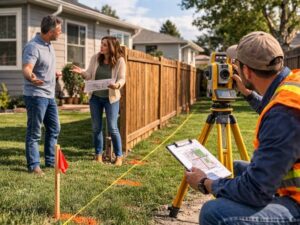
A fence built in the wrong place can sit unnoticed for years. Then comes a home sale, a permit application, or a neighbor starting their own project, and suddenly both property owners are dealing with a problem neither one created.
This guide covers what actually happens, what it costs, and what developers need to know before it becomes their headache.
Why Fence Mistakes Can Stay Hidden for Years
Most fences get built without a survey. The owner walks the yard, finds an old stake or a tree line, and assumes that marks the boundary. Sometimes it does. Often it doesn’t.
In Pembroke Pines, lots in older subdivisions sometimes have boundaries that don’t line up with what you’d expect from looking at the street. Add years of landscaping, sod replacement, and driveway work, and those original markers get buried or disappear completely.
Each new owner inherits the fence without questioning it. Nobody pulls permits for a fence replacement. The assumption just gets passed down.
What keeps it hidden:
- Ownership changes. Buyers rely on the listing, not a survey.
- Landscaping. Hedges and trees grow over markers and pins.
- Assumptions. Neighbors agree informally and nothing gets recorded.
- No permits pulled. Many fence jobs skip the permit process entirely.
The error stays invisible until something forces a closer look.
Unexpected Problems That Can Affect Both Property Owners
A misplaced fence does more than shift a boundary line. It creates real, practical problems that both neighbors end up dealing with.
Access issues. If a fence cuts across a utility easement or blocks a drainage corridor, the city or utility company can require it to be moved, regardless of who built it or when.
Drainage changes. South Florida’s flat terrain makes water flow unpredictable. A fence that sits even a few feet into the wrong location can redirect sheet flow, causing standing water on one property that never flooded before.
Maintenance liability. Who maintains the fence? Who pays when a storm damages it? If the fence is on the wrong side of the line, the legal owner of that strip of land may have claims the fence builder never expected.
Setback violations. Pembroke Pines has setback requirements for fences based on zoning and lot type. A fence installed by the previous owner may not meet current code. When a developer pulls permits for new construction, that violation can come up.
None of these are hypothetical. They come up regularly in title work and permitting in Broward County.
How Real Estate Transactions Can Bring Fence Issues to Light
Developers buying land in Pembroke Pines for redevelopment or new construction will encounter fence issues during due diligence. Here’s where it typically surfaces:
Title searches. A thorough title search may reveal prior surveys that show the fence location doesn’t match the legal boundary. Title companies in Florida often flag encroachments as exceptions to coverage.
Survey requirements. Lenders financing commercial or development deals require a current survey. That survey will show exactly where the fence sits relative to the property line.
Permit applications. When a developer submits plans to the city of Pembroke Pines, the site plan has to match reality. A fence sitting two feet into an adjacent parcel shows up immediately.
Neighbor projects. If the neighboring property owner pulls permits for their own construction, their survey will document the encroachment, and suddenly both parties are in the middle of it.
The longer the fence has sat in the wrong place, the more layers of documentation the issue has to cut through.
What Options Property Owners Have After a Fence Error Is Discovered
Once a misplaced fence is identified, property owners have several paths. The right one depends on how far off the fence is, the relationship between neighbors, and what development plans are in play.
Relocate the fence. The most straightforward option. The fence gets moved to the correct boundary. Both parties agree, the work gets done, and permits get pulled if required. This works best when the encroachment is minor and caught early.
Boundary line agreement. Florida allows neighboring landowners to enter into a written boundary line agreement. This document, recorded in the Broward County public records, officially establishes where the parties agree the boundary sits. It doesn’t change the legal description, but it resolves the dispute without litigation.
Easement. If the fence serves a function both parties want to keep, an easement can grant the right to maintain it across the property line. This requires a written, recorded document and typically involves a real estate attorney.
Adverse possession. In Florida, a party can claim ownership of land they’ve openly, continuously, and exclusively used for at least seven years under color of title, or without it under specific conditions. This is a legal process, not a quick fix, and the standard is strict. It’s worth understanding as a developer buying property with long-standing fence disputes attached to it.
Litigation. When neighbors can’t agree, a quiet title action or ejectment suit may be the only path. Broward County courts handle these, but the cost in time and legal fees is significant.
Why Solving the Problem Early Usually Costs Less
A fence two feet off the property line is a manageable problem. The same fence, discovered during a closing or a permit review three years later, can kill a deal or delay a project by months.
For developers, the math is straightforward:
Getting a boundary survey before closing on a property runs a few hundred to a couple thousand dollars depending on lot size and complexity. Resolving an encroachment dispute after closing, with attorneys involved and a title exception on the policy, can run ten times that, plus the cost of delays.
Neighbor relationships matter too. A property owner who finds out about a fence problem through a surveyor hired during a friendly conversation reacts differently than one who gets a letter from an attorney. Early, direct conversations preserve the kind of goodwill that makes future access and cooperation easier.
The practical takeaway: identify fence placement issues before any contract goes hard. Don’t wait for the title commitment to surface.
Frequently Asked Questions
Can a fence built in the wrong place give someone a legal claim to that land in Florida?
Yes, potentially. Florida recognizes adverse possession after seven years of open, continuous, exclusive use under certain conditions. A fence that’s been in the wrong place for that long, with the encroaching party treating the land as their own, can become the basis for a legal claim. A real estate attorney familiar with Florida property law should evaluate any long-standing encroachment before you close.
Does Pembroke Pines require a permit to relocate a fence?
Yes. The City of Pembroke Pines requires a permit for fence installation and, in most cases, for replacement or relocation. Check current requirements with the city’s Building Division before starting any work.
Who is responsible for a fence that was built by a previous owner?
Generally, the current property owner is responsible for structures on their land, including fences that straddle or cross a boundary line. If the fence is on a neighbor’s property, the neighbor may have the right to demand it be removed.
Can title insurance protect a buyer if a fence encroachment is discovered later?
Standard title insurance may exclude encroachments that a current survey would reveal. If a lender or buyer survey is conducted and the encroachment is identified, it will typically appear as an exception in the title commitment. Buyers should review those exceptions carefully and address them before closing, not after.
What’s the first step a developer should take if a survey shows a fence in the wrong place?
Get a licensed Florida surveyor to document the exact location of the fence relative to the legal boundary. Then consult a real estate attorney before approaching the neighboring property owner. Having accurate documentation in hand puts you in a much better position to negotiate a resolution, whether that’s relocation, a written agreement, or an easement.
For a free land surveying quote, call us at (954) 737-7509 or send us a message by going here.
Posted in land surveying, land surveyor | Tagged cost of land surveying, estimating the cost of land surveying, land surveying cost, land surveying cost Pembroke Pines