
Can Trees, Hedges, and Landscaping Change Property Lines?
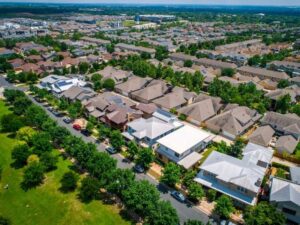
A hedge that’s been growing along the back yard for 20 years feels like a boundary. It looks like one. Neighbors treat it like one. But a property line survey will tell you if it actually is one, and the answer is almost always no. Plants don’t move legal property lines. What they do is create confusion, disputes and expensive surprises. This article explains what landscaping can and can’t do to a property boundary.
Why Plants Feel Like Boundaries But Aren’t
Hedges, trees and garden beds get planted near property lines all the time. Over years, they grow. They fill in. Both neighbors stop thinking about where the actual line is and start treating the plants as the divider.
That assumption causes real problems when someone wants to build, sell or resolve a dispute.
The legal property line is recorded in a deed and confirmed by a licensed surveyor. It doesn’t move because a tree grew over it. It doesn’t shift because a hedge filled out toward the neighbor’s yard. The plants are on the land. They don’t define it.
In Broward County, property boundaries are established through recorded plats and legal descriptions tied to survey benchmarks. No amount of landscaping history changes those recorded documents.
What Landscaping Actually Does to a Property Dispute
Even though plants can’t legally move a boundary, they create three real problems.
They Hide the Survey Markers
Metal pins and iron rods mark property corners. They get driven into the ground at the time of survey. Over years, grass grows over them. Tree roots push them sideways. Thick hedges make them impossible to find without digging.
When a property line survey is ordered, the surveyor has to locate those original markers. If they’ve been buried or displaced by landscaping, the job takes longer and costs more. Worse, a displaced marker that went unnoticed for years can lead to boundary data that needs extra research to verify.
They Create the Illusion of Agreement
Two neighbors who both maintain a hedge line often assume the plants mark the agreed boundary. There’s no paperwork behind that assumption. When one neighbor sells, the new owner has no obligation to honor a landscaping arrangement the previous owners quietly accepted.
This happens regularly in Pembroke Pines neighborhoods where homes have changed hands multiple times. Each new owner inherits the physical layout of the yard but not any informal agreements the previous owner made with the neighbor next door.
They Can Support an Adverse Possession Claim, But Rarely Succeed
Florida does have an adverse possession law. Under Florida Statute 95.18, a person who openly occupies and maintains land that belongs to someone else for at least seven years may be able to claim legal ownership of that land under specific conditions.
Maintaining a hedge or garden bed on the neighbor’s side of the line could technically factor into an adverse possession claim. But the bar is high. The occupation must be open, continuous, hostile and under a claim of right. Most landscaping situations in residential Pembroke Pines don’t meet that standard, especially since Florida also requires payment of property taxes on the disputed land in most adverse possession cases.
The point is that it’s possible, even if uncommon. A property line survey done before a dispute reaches that stage is far cheaper than litigation after it does.
Trees on or Near the Property Line
Trees are their own category of problem. A tree planted directly on the boundary line is legally shared between both property owners in Florida. Neither owner can remove it without the other’s consent. Both owners share responsibility for its maintenance.
A tree planted on one side of the line belongs to that property owner alone, even if the branches and roots cross over. The neighbor can trim branches that cross the line up to the boundary, but can’t remove the tree itself.
The trouble starts when no one knows exactly where the line is. A tree that looks like it’s on one side may be on the other once a survey is done. That changes who owns it, who’s responsible for it and who pays if it falls on a structure.
Tree removal often requires a permit from the city. If the tree turns out to be on a disputed boundary, getting that permit can stall until the ownership question is resolved. A property line survey settles that question fast.
When to Order a Property Line Survey Over a Landscaping Dispute
Don’t wait for a neighbor to hire a lawyer. Order the survey early.
If you’re planning to install a fence and there’s a hedge or tree line nearby, get the survey first. The existing vegetation is almost certainly not exactly on the legal line, and building a fence based on where the plants are instead of where the line actually is creates the same problem all over again.
If a neighbor is expanding a garden bed, adding a new hedge or planting trees near the shared boundary, it’s worth knowing where the line sits before that landscaping gets established. It’s much easier to have the conversation early than after the plants are mature.
If you’re buying a property and the yard has well-established landscaping near the boundaries, ask for a current survey before closing. What looks like a clear boundary from the outside may be sitting two feet over the legal line.
How a Property Line Survey Handles Landscaping Disputes
A licensed Florida surveyor locates the original property corners, confirms them against the recorded plat and places the boundary on the ground. That gives both parties a clear, documented reference point that overrides any informal arrangement based on where plants happen to be.
If the survey shows that a hedge, tree or garden bed crosses the legal line, the property owners can address it with accurate information instead of guesses. Some disputes resolve quickly once both parties can see exactly where the line is. Others require legal input, but at least they start from a factual foundation.
The survey creates a record. That record protects the current owner and transfers with the property to future buyers.
Frequently Asked Questions
Can Hedges or Tree Lines Legally Define a Property Boundary?
No. Plants do not establish legal property boundaries in Florida. Property lines are determined by recorded deeds and confirmed through a survey performed by a licensed surveyor. Even long-standing hedges and tree lines do not change the legal boundary.
What Happens When a Tree Sits Directly on the Property Line?
Under Florida law, a tree located exactly on the boundary line is generally considered shared property. Both neighbors have ownership rights and responsibilities, and neither party can remove the tree without the other’s consent. A property line survey can determine the tree’s exact location.
Can a Neighbor Gain Ownership Through Landscaping Maintenance?
Possibly, but Florida’s adverse possession laws have strict requirements. The use of the land must be open, continuous, and meet specific legal standards for at least seven years. Routine yard maintenance alone is usually not enough to establish ownership.
How Can a Property Line Survey Help Resolve Landscaping Disputes?
A property line survey identifies and marks the legal boundary on the ground. This allows homeowners to see where trees, hedges, fences, and other improvements are located in relation to the property line, reducing uncertainty and helping settle disagreements.
Is It a Good Idea to Get a Survey Before Planting Near a Property Line?
Yes. Having a survey completed before planting trees, shrubs, or hedges can help prevent future disputes and ensure that landscaping improvements remain within your property boundaries. It also helps avoid costly issues as vegetation grows and matures.
For a free land surveying quote, call us at (954) 737-7509 or send us a message by going here.