
ALTA Survey for Shopping Centers With Multiple Outparcels
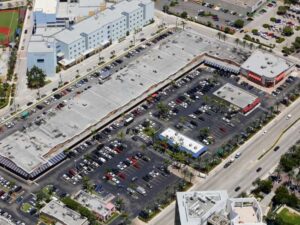 An ALTA survey built around the whole center and each outparcel gives everyone a clear picture of what’s being sold, financed, and shared. An outparcel sale can look like a clean, simple deal: one pad, one buyer, one closing. In practice, that pad shares driveways, parking, signs, utilities, and stormwater systems with the rest of the shopping center. If those shared rights aren’t clearly shown, buyers and lenders get nervous, title exceptions pile up, and closings slip.
Identifying Individual Outparcel Boundaries Within a Shopping Center
An outparcel is a separate lot within or next to a shopping center, often along the street frontage. Banks, restaurants, and quick-service retailers commonly sit on outparcels. Each one needs its own clear boundary, even though it functions as part of the larger site.
The surveyor starts with the parent tract, which is the overall shopping center property. Then each outparcel boundary is located from recorded plats, deeds, and prior surveys. Outparcels created at different times can have descriptions that don’t line up perfectly, leaving small gaps or overlaps.
Ask the surveyor to show how each outparcel fits within the parent tract. That makes it easier to spot description problems before a sale. If an outparcel hasn’t been legally created yet, the owner may need a plat, lot split, or new legal description before closing, depending on local rules.
Reviewing Shared Access Agreements and Cross-Easements Between Parcels
Most shopping centers run on a recorded agreement that ties the parcels together. It may be called a reciprocal easement agreement, an operation and easement agreement, or a declaration of covenants. These documents usually grant cross-easements, which are shared rights to use each other’s driveways, parking, and other areas.
An ALTA survey plots the easements that can be located from the recorded documents. That shows whether driveways actually match the easement areas described on paper. It also reveals access routes customers use every day that may not be covered by any recorded right.
Look closely at the outparcel’s connection to the street and the main center. Many outparcels rely on shared drives instead of their own curb cuts. If the survey shows a gap in recorded access, your attorney and title company can advise on next steps before the deal moves forward.
Access questions to answer early
- Does the outparcel have direct street frontage or rely on shared drives
- Do the physical drives match the recorded easement areas
- Are any traffic routes used without a recorded right
- Do signs, landscaping, or curbs block an easement
Documenting Parking Areas, Drive Aisles, and Common Site Improvements
Parking is often shared across a shopping center. Some agreements allow outparcel customers to park in the main lot, while others limit each parcel to its own spaces. The survey can count and show parking spaces, accessible spaces, and drive aisles when that item is requested.
Common improvements also need to be documented. That can include pylon signs, landscaping islands, lighting, retaining walls, dumpster enclosures, and sidewalks. Some of these sit on one parcel but serve several others.
Lenders and buyers often ask about encroachments on outparcel deals. A canopy, sign base, or curb line can cross a parcel line without anyone noticing for years. Catching it on the survey gives the parties time to address it with an agreement or a title solution.
Examining Utility Easements and Infrastructure Serving Multiple Outparcels
Utilities in shopping centers are often shared. Water, sewer, storm drainage, power, and communications lines may run across several parcels before reaching an outparcel. Each crossing should be backed by a recorded easement or covered by the center’s governing agreement.
The surveyor locates visible utility features like manholes, inlets, valves, and transformers. Underground lines may be shown from plans, markings, or utility locates, depending on the scope requested. Survey scope for utilities can vary, so confirm what level of detail your lender or buyer needs.
Stormwater deserves special attention. Many centers rely on one shared retention or detention pond. If an outparcel drains into that system, the rights and maintenance duties should be clear in the recorded documents.
Coordinating ALTA Survey Deliverables for Outparcel Sales and Financing
Every outparcel deal may involve its own buyer, lender, and title company. Each party may ask for specific certifications, Table A items, or formatting. Table A is the list of optional add-ons to an ALTA survey, like parking counts, zoning information, and utility details.
Plan deliverables before fieldwork starts. A survey of the whole center with separate sheets or exhibits for each outparcel can save time on future sales. It also keeps every outparcel tied to the same boundary and control.
Requirements can vary by lender, title company, municipality, county, and project scope. Get those requirements in writing early, and share your closing dates with the surveyor. If several outparcels are selling around the same time, coordinating the survey work can prevent repeated fieldwork and conflicting drawings.
Frequently Asked Questions
What is an ALTA survey?
An ALTA survey is a detailed land title survey built to national standards. It shows boundaries, improvements, easements, and title matters in a format lenders and title insurers widely accept. Clients can add optional Table A items for extra detail. It’s common on commercial sales and financing.
Does each outparcel need its own ALTA survey?
Often, yes, since each sale or loan may need its own certified drawing. Some owners order one survey of the whole center with separate outparcel exhibits. That can make later sales faster and more consistent. Ask your lender and title company what they’ll accept.
What is a reciprocal easement agreement?
It’s a recorded document that sets shared rights and duties between parcels in a shopping center. It usually covers access, parking, utilities, signs, and maintenance. The survey plots the easement areas that can be located. Your attorney can explain the legal terms.
For a free land surveying quote, call us at (954) 737-7509 or send us a message by going here.
Posted in ALTA survey | Tagged ALTA survey