
Getting a Property Survey Before Renting Out a Home
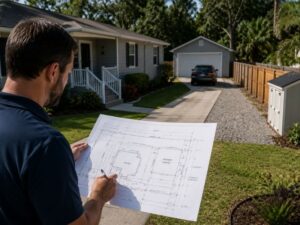
A property survey can save a landlord from a lease dispute before it ever starts. Developers who turn single family homes into rentals often skip this step, assuming the original purchase survey still covers everything a tenant needs to know. It doesn’t always. A current property survey confirms exactly what a tenant can use, park on, and access, and that clarity prevents a lot of headaches down the road.
Here’s why this matters before you list a rental, and what to check first.
Why Lease Boundaries Should Match the Actual Surveyed Use Area
A lease agreement often describes the property in general terms, like “the home and yard.” But without a survey backing that description, the actual boundary of what a tenant can use stays fuzzy. A tenant might assume the whole yard is theirs, when part of it actually belongs to a neighboring parcel or falls under a shared easement.
A property survey gives you the real boundary lines to reference when writing the lease. That way, the lease describes an area that matches reality, not a guess based on where the grass ends.
What to do:
- Pull a current property survey before drafting any lease language about yard or outdoor space.
- Match the lease description to the surveyed boundary, not a visual estimate.
- Mark any area excluded from tenant use directly on a copy of the survey for your records.
How Shared Driveways Can Create Maintenance Confusion for Tenants
Shared driveways are common on older lots, especially where properties were subdivided years ago. A tenant using a shared driveway needs to know where their responsibility ends and the neighbor’s begins. Without survey data, that line is often just assumed, and assumptions lead to disputes over snow removal, repairs, or parking.
A survey shows exactly how the driveway easement is structured, including who has legal rights to use it and where maintenance responsibility typically falls based on the easement terms.
What to do:
- Check the survey for any shared driveway easement before finalizing tenant parking rules.
- Explain shared driveway boundaries clearly in the lease, based on what the survey shows.
- Keep a copy of the easement terms on hand in case a maintenance dispute comes up later.
Why Detached Garages and Sheds Need Location Verification Before Leasing
A detached garage or shed included in a rental listing needs to actually sit within the property’s legal boundary. Older structures sometimes drift close to or across a property line, especially on lots that changed hands multiple times without anyone rechecking the survey.
If a tenant is promised use of a garage that’s technically encroaching on a neighboring lot, that’s a liability problem waiting to surface. A current survey confirms the structure’s real location before you advertise it as part of the rental.
What to do:
- Verify that any garage or shed included in the listing sits fully within the surveyed property line.
- Flag any structure that appears close to a boundary for a second review before listing.
- Remove or clarify use of any structure the survey can’t confirm is fully on your property.
How Private Outdoor Areas Can Be Misrepresented Without Survey Data
Rental listings often advertise “private backyard” or “private patio” without confirming what private actually means on paper. Sometimes that outdoor space overlaps with a utility easement, a drainage area, or a section technically accessible to a neighboring unit. Calling it fully private without checking can set up a tenant complaint later.
A survey shows what’s actually private versus what carries some form of access right for someone else. That distinction protects you from a tenant who feels misled once they find out the “private” yard isn’t quite what was advertised.
What to do:
- Confirm what “private” actually means for each outdoor area using the survey, not the listing photos.
- Avoid advertising an area as private if a utility or access easement runs through it.
- Update listing language to reflect any shared or restricted-use zones the survey reveals.
Why Rental Listings Should Avoid Guessing Lot Size or Yard Access
Lot size numbers pulled from old public records or estimated by eye can be wrong, sometimes by a significant margin. Advertising an inflated lot size, even accidentally, can lead to tenant complaints or, in rarer cases, legal claims about misrepresentation.
A current property survey gives you an accurate number to use in listings and lease documents. It also confirms actual yard access points, which matters if a tenant needs to know how they’re supposed to reach outdoor space from the unit.
What to do:
- Use the surveyed lot size in listings, not a number pulled from an old tax record.
- Confirm actual yard access routes match what’s described in the lease.
- Update listing details anytime a new survey shows a different figure than what was previously advertised.
What This Means for Your Rental Property
A property survey clears up boundary confusion before a tenant ever moves in. Lease boundaries, shared driveways, detached structures, private outdoor space, and listing accuracy all depend on knowing the real property lines. Order the survey before you list the home, and build your lease language around what it actually shows. It’s a small step that avoids a much bigger dispute later.
Frequently Asked Questions
Do landlords need a new property survey for every rental unit, or just once per property?
Generally, once per property is enough unless boundary lines change because of a subdivision, easement update, or dispute with a neighbor. Keep the survey on file for future leases.
Can a tenant request to see the property survey before signing a lease?
Tenants can ask, and many landlords choose to share relevant boundary information to avoid future disputes. However, sharing the full survey is not always required by law.
What happens if a rental listing advertises yard space that is not actually part of the property?
This can lead to tenant complaints, lease disputes, or in some cases, legal claims of misrepresentation, especially if the tenant relied on that space when deciding to rent.
Does a property survey affect what a landlord can legally include in a lease?
Yes. Lease terms describing usable space, parking, or outdoor areas should match what the survey confirms. Inaccurate lease language can create liability if a dispute arises.
How often should a landlord update a property survey for a long-term rental property?
There is no fixed rule, but many landlords review it every several years or after nearby construction, subdivision activity, or a boundary-related complaint from a tenant or neighbor.
For a free land surveying quote, call us at (954) 737-7509 or send us a message by going here.
Posted in land surveying, land surveyor | Tagged Property Survey, Property Surveyor