
How a Home Survey Can Help Prevent Expensive Property Mistakes
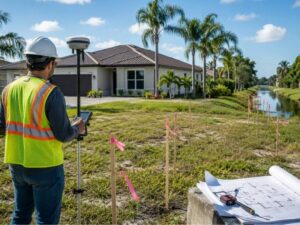
A home survey can save you thousands of dollars before you break ground or sign a contract. Developers in Pembroke Pines know this city moves fast. Broward County parcels get subdivided, rezoned, and flipped constantly. Without a current survey, you’re building on assumptions, and assumptions cost money.
This article explains what a home survey actually catches, why developers in Pembroke Pines face specific risks without one, and what to do before your next acquisition or build.
What a Home Survey Actually Does
A home survey measures and records the exact legal boundaries of a parcel. A licensed surveyor visits the property, uses GPS and field instruments, and produces a legal document of your property showing where the lot begins and ends.
That document also shows:
- Easements running through the property
- Encroachments from neighboring structures
- Setback lines from streets, canals, and utilities
- Any overlap with adjacent parcels
These aren’t minor details. Any one of them can stop a permit or kill a deal.
Why Pembroke Pines Developers Face Higher Risk Without One
Pembroke Pines sits in western Broward County. The city has a mix of older platted subdivisions, newer master-planned communities, and undeveloped parcels near the Everglades buffer zone. That variety creates real complications.
Drainage and Utility Easements Are Everywhere
Broward County’s flat terrain means drainage easements cross through residential lots constantly. A survey will show exactly where South Florida Water Management District (SFWMD) or local utility easements sit. Build inside one without knowing, and you’re looking at forced removal, fines, or both.
Older Plats Don’t Always Match Current Conditions
Pembroke Pines was heavily developed in the 1970s and 1980s. Some recorded plats from that era have discrepancies. Fences, walls, and driveways from 40 years ago don’t always line up with the legal description on file. A current survey catches what the old paperwork misses.
Canal Setbacks Add Another Layer
Many parcels in Pembroke Pines border drainage canals maintained by Broward County or SFWMD. Both agencies enforce setback requirements from the top of canal banks. Those setbacks don’t always appear in a title search. A survey marks them clearly.
The Mistakes a Survey Prevents
Developers skip surveys to save time or cut costs upfront. That math rarely works.
Encroachment disputes. A neighbor’s fence, wall, or driveway sitting six inches onto your parcel sounds minor. During construction, it blocks your contractor and triggers a dispute that can last months.
Permit rejections. Broward County’s building department requires a survey for most new construction and major renovations. Submitting without one, or with an outdated one, delays permits and adds cost.
Easement conflicts. FPL, AT&T, and county drainage authorities all hold easements across residential properties in Pembroke Pines. Building over or near one without knowing its exact location leads to stop-work orders.
Inaccurate lot coverage calculations. Pembroke Pines zoning limits impervious surface coverage. If your lot size is off by even a few hundred square feet, your site plan could exceed limits, sending you back to the drawing board.
Title problems at closing. Lenders and title companies often require a current survey before funding. An outdated or missing survey can delay or derail your closing.
When to Order a Home Survey
Order one at these specific points:
- Before you make an offer. Boundary issues and easements affect value. Know before you negotiate.
- Before you pull a permit. Broward County building requires survey data. Having it ready speeds approval.
- Before you finalize a site plan. Accurate boundaries and easement locations shape every design decision.
- When a neighbor starts construction nearby. Encroachments often appear during adjacent projects.
One survey early in the process is almost always cheaper than fixing a problem after work has started.
What Type of Survey Do You Need?
Different projects require different survey types. Here’s a quick reference for Pembroke Pines developers:
Boundary survey. Defines the legal limits of the parcel. Required for most permit applications.
Topographic survey. Shows elevation changes, drainage patterns, and existing features. Critical for grading and drainage design in Broward County’s flat terrain.
As-built survey. Documents what was actually constructed versus what was planned. Required for certificate of occupancy in most Broward County projects.
ALTA/NSPS survey. The most detailed option. Required by most commercial lenders. Shows easements, encroachments, utilities, and more.
Talk to a licensed Florida surveyor to confirm which type fits your project scope.
Frequently Asked Questions
Is a home survey required before buying property in Pembroke Pines?
Florida law doesn’t mandate a survey for every real estate transaction. But most lenders and title insurers require one. Even when it’s optional, skipping it exposes a buyer to boundary disputes, easement conflicts, and encroachments that won’t show up in a title search.
How long does a home survey take?
A standard residential boundary survey typically takes three to seven business days from the time the surveyor receives the order. Complex parcels, ALTA surveys, or backlogged schedules can extend that. Plan ahead so survey delays don’t slow your permit timeline.
Can I use a survey from the previous owner?
Generally, no. An existing survey doesn’t reflect changes that happened after it was completed. New fences, additions, utility installations, and adjacent construction can all affect what a current survey shows. Lenders and the Broward County building department typically require a recent survey.
What is the difference between a survey and a title search?
A title search reviews recorded documents. It tells you who owns the property and what liens or claims exist. A survey shows the physical reality on the ground. An easement can be recorded in the title chain but still surprise you if you don’t know exactly where it runs. You need both.
Who is responsible if a survey contains an error?
Licensed surveyors carry professional liability insurance. If a survey error causes financial harm, you may have a claim against the surveyor’s insurance. Keep all survey documents and correspondence. For significant projects, confirm your surveyor’s license status through the Florida Department of Business and Professional Regulation (DBPR) before hiring.